
Procedures
Botox for TMJ / Masseter
Botox can be a helpful adjunct for selected patients with clenching‑related muscle pain or masseter hypertrophy.
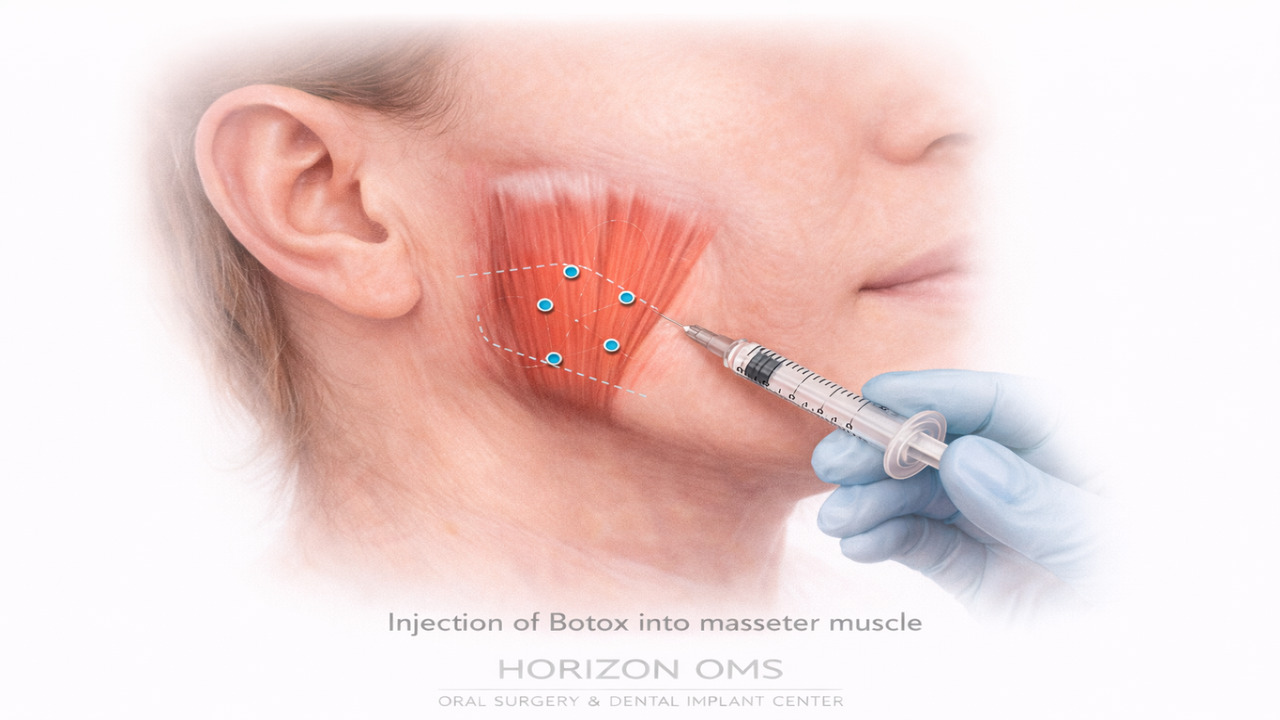
What is Botox for TMJ / masseter?
Botox (botulinum toxin) can be used to reduce overactivity in the jaw muscles—most commonly the masseter and sometimes the temporalis—when muscle tension and clenching contribute to pain, tightness, or spasm. By calming excess muscle activity, Botox can ease discomfort linked to bruxism (teeth grinding), habitual clenching, and certain patterns of muscle-driven jaw pain that overlap with TMJ symptoms.
The anatomy behind jaw muscle Botox
The masseter is one of the strongest muscles in the body for its size, running from the cheekbone down to the angle of the jaw, and it works alongside the fan-shaped temporalis muscle at the temple to power chewing and clenching. Because the jaw's muscles, joint, and supporting structures are so closely interconnected, jaw pain can originate from the muscles, the joint itself, or some combination of the two — which is part of why an accurate diagnosis matters before treatment begins.
Injection placement also has to account for what surrounds the masseter, not just the muscle itself. The facial nerve's buccal and marginal mandibular branches, the parotid gland and its duct (Stensen's duct), and several facial blood vessels all pass close to typical injection sites. Treating this area safely depends on a three-dimensional understanding of that anatomy, not just knowing where the muscle sits on the surface.
Who may benefit
- Patients with clenching-related jaw pain or muscle fatigue
- Masseter hypertrophy (enlarged jaw muscles) associated with bruxism
- Recurrent muscle spasm contributing to facial pain patterns
Botox is not the right tool for every TMJ diagnosis, so evaluation matters — some patients need joint-directed therapy, others need muscle-directed therapy, and many benefit from a combination of both.
Why patients trust an oral & maxillofacial surgeon with Botox care
Botox for jaw muscle and TMJ symptoms is often marketed as a simple cosmetic injection, but the jaw is a dense, functional structure where nerves, glands, and blood vessels sit close together. Oral and maxillofacial surgeons complete years of surgical residency training focused specifically on the anatomy of the face, jaws, and mouth — the same structures a masseter or temporalis injection has to work around.
- Extensive, hands-on training in facial nerve anatomy, which helps guide injection placement away from branches that control smile and lower lip movement
- Direct surgical experience with the parotid gland, its duct, and the vascular structures running through the masseter region
- Training in diagnosing and treating TMJ disorders directly, so the decision isn't just where to inject, but whether Botox is the right tool for your symptoms at all
- The ability to fold Botox into a broader treatment plan — including imaging, exam findings, and referral to a trusted colleague for splint or appliance therapy when indicated — so your care stays coordinated even when a step happens outside our office
- Comfort working across the jaw's full range of pathology, from muscle spasm to joint dysfunction to bony changes, which informs more individualized dosing and placement decisions
This depth of training doesn't guarantee a particular outcome for every patient, but it does mean the person planning and administering your treatment has spent years studying the exact anatomy involved, rather than learning a small set of injection points in isolation.
How it fits into TMJ management
Botox is often used as part of a broader plan that may include occlusal appliance therapy, physical therapy, habit modification, and management of contributing dental factors. We start with an exam to determine whether your symptoms are primarily muscular, joint-based, or a mix of both, since that distinction shapes which combination of therapies makes sense. We don't provide splint or appliance therapy in-house, so when it's indicated we refer you to one of our trusted colleagues and stay coordinated with them on your overall plan.
What to expect at your visit
Your visit begins with an evaluation of your bite, jaw movement, and muscle tenderness to confirm Botox is an appropriate option for your symptoms. Treatment itself is performed in the office and typically takes only a few minutes — a small number of injections are placed into the masseter and, if indicated, the temporalis, guided by the muscle landmarks identified during your exam. Most patients don't need sedation for this treatment. Results build gradually over several days, with peak effect often within 1–2 weeks; some patients also notice a gradual softening of the jawline as muscle overactivity settles, though this is a secondary effect rather than the primary goal for patients being treated for muscle-related pain.
Safety & aftercare
Most patients return to normal activities right away. Temporary chewing fatigue, mild bruising or tenderness at the injection site, or subtle smile changes can occur, depending on anatomy and dosing — these effects are typically short-lived. We use conservative, carefully mapped dosing and precise placement to minimize risk, and we'll walk you through exactly what to expect, what's normal, and when to call our office before you leave.
Ongoing care & combining treatments
Because the effects of Botox fade over time, most patients return every few months for repeat treatment as symptoms indicate. If splint or appliance therapy is also part of your plan, we handle that piece through referral to a trusted colleague, while continuing to manage the Botox and overall evaluation here — so your care stays coordinated even though it's split across two offices.